
CHEXX Payments in Nigeria: Deposits, Crypto and Withdrawals
CHEXX is a crypto-only platform in CHEXX payment information. It supports 11 crypto assets across 9 networks: USDT, USDC, SOL, ETH, BNB, TRX, GRAM, POL, BTC, LTC and TRUMP. CHEXX payment methods do not include an NGN bank-transfer, card or Nigerian fintech rail, so Nigerian users need a compatible crypto wallet and must send a supported asset over the correct network. The full picture is in our CHEXX review for Nigeria.
The most important practical rule is network matching. A supported coin is not enough by itself: the network selected at CHEXX must match the network used by the sending wallet or exchange. The table below maps the listed deposit routes and minimums. For detailed cashout mechanics, use the CHEXX withdrawals guide; for wallet and coin setup, see crypto payments.
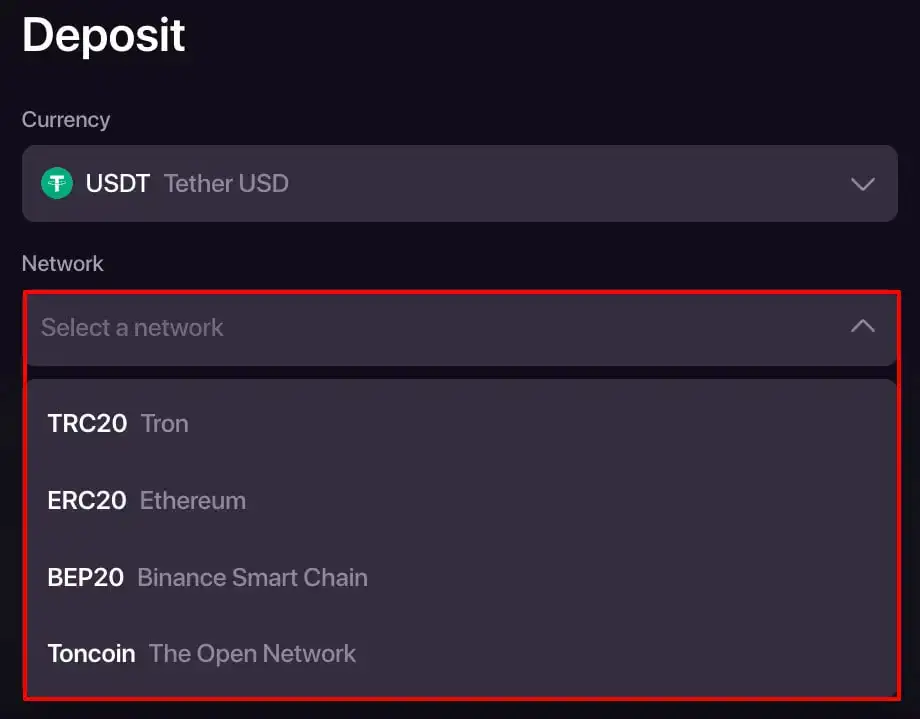
CHEXX payment methods at a glance
| Payment area | listed CHEXX position | What it means for Nigeria |
|---|---|---|
| Funding model | Crypto-only | No NGN fiat rail is listed in CHEXX payment information |
| Crypto assets | 11 | Users choose among supported coins and stablecoins |
| Networks | 9 | The selected blockchain network must match the transfer network |
| CHEXX deposit fee | No fee for receiving deposits | Network or third-party wallet/exchange fees can still exist outside CHEXX |
| Withdrawals | CHEXX states that funds and winnings are available for prompt withdrawal 24/7 | This is availability wording, not a guaranteed settlement time |
The crypto-only structure is the central point for Nigerian users. A local bank account in naira is not listed as a direct CHEXX funding method among CHEXX payment methods. If you buy crypto elsewhere, that external purchase or conversion is separate from the CHEXX cashier and can have its own fees, exchange rate and identity requirements.
Supported cryptocurrencies and networks
The CHEXX payment list lists USDT, USDC, SOL, ETH, BNB, TRX, GRAM, POL, BTC, LTC and TRUMP. These assets are distributed across nine supported networks: ERC-20, BEP-20, TRC-20, Polygon, TON, Bitcoin, Solana, Litecoin and TRUMP.
Some assets appear on more than one network. USDT, for example, is listed on ERC-20, BEP-20, TRC-20, Polygon and TON. USDC is listed on ERC-20, BEP-20 and Polygon. That flexibility can be useful, but it also creates the main operational risk: choosing the right coin while choosing the wrong chain.
Do not assume that an address for one USDT network can safely receive USDT sent over another network. Use the network shown in the CHEXX deposit interface and make the sending side match it exactly.
Minimum deposits by network
| Network | Asset | listed minimum deposit |
|---|---|---|
| ERC-20 | USDT | 5 USDT |
| ERC-20 | USDC | 5 USDC |
| ERC-20 | ETH | 0.003 ETH |
| BEP-20 | USDT | 5 USDT |
| BEP-20 | USDC | 5 USDC |
| BEP-20 | BNB | 0.009 BNB |
| TRC-20 | USDT | 5 USDT |
| TRC-20 | TRX | 15 TRX |
| Polygon | USDT | 5 USDT |
| Polygon | USDC | 5 USDC |
| Polygon | POL | 66 POL |
| TON | USDT | 5 USDT |
| TON | GRAM | 3.8 GRAM |
| Bitcoin | BTC | 0.00008 BTC |
| Solana | SOL | 0.07 SOL |
| Litecoin | LTC | 0.12 LTC |
| TRUMP | TRUMP | 3.4 TRUMP |
Minimums are asset-specific, so there is no single universal crypto deposit threshold. Stablecoin routes are easy to compare because several are expressed as 5 USDT or 5 USDC, while native-chain assets have their own minimum quantities.
For a Nigerian user funding from an external exchange, the useful comparison is not just the CHEXX minimum. You also need to consider the exchange’s withdrawal minimum and network fee before sending. Those third-party costs are outside the listed CHEXX fee claim and can make a small transfer uneconomical even if it clears CHEXX’s minimum.
Does CHEXX accept naira?
Not as a direct payment rail in CHEXX payment information. The cashier is crypto-only, and no NGN bank transfer, card processing route or Nigerian fintech option is listed as a CHEXX deposit method.
This distinction matters because a site can display account values in a fiat reference currency without actually settling deposits in that currency. CHEXX’s help material describes an account setting for fiat balance display, but that does not turn NGN into a supported deposit asset. Funding still depends on the crypto choices available in the cashier.
If you start with naira, any step used to acquire a supported cryptocurrency occurs outside CHEXX. No particular exchange or conversion service is recommended because CHEXX does not designate one.
How a CHEXX crypto deposit works
- Open an existing account or complete registration, then go to the wallet or deposit area.
- Select a supported cryptocurrency.
- Select the blockchain network offered for that asset.
- Copy or scan the deposit address shown by CHEXX.
- On the sending wallet or exchange, choose the same asset and the same network.
- Enter an amount that clears the applicable CHEXX minimum and any sending-platform requirements.
- Verify the address and network before confirming the transfer.
The network check is the step most worth slowing down for. CHEXX’s own withdrawal help warns that using the wrong wallet address or network can create problems. The same operational principle applies when moving crypto in the other direction: blockchain transfers are not comparable to typing a bank account number into a reversible local transfer form.
A small test transfer can reduce address risk when your sending platform permits it economically, but it may also cause extra network fees. Whether that is worthwhile depends on the asset, network and sending service.
Deposit fees
CHEXX charges no fee for receiving deposits. That statement is about the CHEXX side of the transfer. It should not be expanded into “deposits are free” because a blockchain network, wallet or exchange can impose its own fee before the funds reach CHEXX.
For practical budgeting, separate three possible cost layers: the cost of converting NGN into crypto outside CHEXX, the withdrawal or network charge applied by the sending service, and the CHEXX receiving fee. The CHEXX statement only sets the last layer at zero.
This is especially important for small deposits. A 5 USDT minimum route can look inexpensive, but an external network or withdrawal charge may represent a meaningful percentage of that amount. Compare the full transfer cost rather than looking only at the casino minimum.
Withdrawals from CHEXX
CHEXX states that money in a client account and winnings are available for prompt withdrawal 24 hours a day, 7 days a week. The wording describes round-the-clock withdrawal availability. It is not a promise that every blockchain settlement reaches an external wallet instantly or within a fixed number of minutes.
Current CHEXX help material explains that a withdrawal involves selecting the currency and network, entering a wallet address, choosing the amount and confirming the request. The help center also notes that blockchain congestion, an additional wallet check or an incorrect address/network can delay or disrupt a transfer.
CHEXX lists an example minimum withdrawal of 3 USDT on BEP-20, but this overview does not generalize that number to every asset or network. Exact withdrawal limits are a higher-risk, route-specific detail and belong in the dedicated withdrawal guide.
Why network matching matters more than the coin name
With multi-network assets such as USDT and USDC, the ticker alone does not identify the transfer route. USDT on ERC-20 and USDT on TRC-20 are the same token symbol presented over different blockchain networks. A deposit address generated for one network should be treated as a network-specific destination.
Before sending, compare the network label in three places: the CHEXX cashier, the sending wallet or exchange, and the confirmation screen. If those labels do not match, do not proceed. This is the most important practical payment check in the CHEXX setup because the platform supports several repeated assets across multiple chains.
Also inspect whether the sending service requires a memo, tag or other identifier for the selected asset. The CHEXX payment table does not provide a universal rule for every external wallet, so the sending platform’s own instructions still matter.
Choosing a practical payment route
There is no single best network for every Nigerian user. A sensible choice depends on which supported asset you already hold, which networks your wallet or exchange supports, the current network cost and the applicable minimums. The CHEXX matrix gives you the eligible routes, but it does not determine the cheapest external transfer at every moment.
If you already hold a supported asset on a supported network, using that route can avoid an unnecessary conversion. If you are buying crypto specifically to fund CHEXX, compare the total acquisition and withdrawal cost before committing. Do not select a network only because its CHEXX minimum is low if your external service charges a much larger withdrawal fee on that chain.
For a deeper walkthrough of supported coins and network logic, use the CHEXX crypto payment guide.
Payment checklist for Nigerian users
- Confirm the asset is one of the 11 supported cryptocurrencies.
- Confirm the network is one of the 9 supported routes.
- Check the exact minimum for that asset-network pair.
- Make the sending network match the CHEXX deposit network exactly.
- Review any exchange, wallet or blockchain fee before sending.
- Do not treat NGN balance display as proof of NGN deposit support.
- For withdrawals, verify the destination address and network before confirmation.
- Use the transaction history in your account to track withdrawal status.
This checklist captures the main difference between a crypto-first cashier and a conventional Nigerian payment flow. The user controls more of the transfer route, which creates flexibility but also puts more responsibility on address and network accuracy.
The practical trade-off in CHEXX payments
CHEXX payments are crypto-only in the listed Nigeria payment information, with 11 assets across 9 networks and no direct NGN fiat rail listed. The strongest practical advantage is the range of supported crypto routes. The main operational risk is sending the correct asset over the wrong network.
CHEXX payment information says it does not charge a fee for receiving deposits and states that funds and winnings are available for prompt withdrawal 24/7. External network, wallet and exchange costs can still apply, and withdrawal settlement can be affected by blockchain conditions or checks. Which assets and networks are accepted: crypto payments.
Use the dedicated withdrawals page for cashout-specific limits and process details, or the crypto guide for a deeper explanation of assets and networks. For the broader platform context, return to the main CHEXX Nigeria review.